How to create a strategy for customer retention? Subscription business is a specific case here. Especially today, when a massive wave of subscription cancellations is reshaping the industry…
But first things first. Subscription itself is a great deal. It entails an extremely convenient setup for customers, while businesses can count on an increased Customer Lifetime Value (CLV) to stabilize their revenue, killing two birds with one stone.
The problem? Consumers are tired of subscriptions.
Juggling subscriptions for four different streaming platforms, online yoga classes, meal deliveries, cosmetics, and even plain razors can make anyone’s head spin.
What started as an extreme convenience turned into a fatigue — oh my, yet another subscription service I’ll forget to turn off? No, thank you.
Let’s face it: not everything has to be a subscription.
But in those cases where it makes sense, how can you convince your customers that you’re the one they should stick with? When the market is oversaturated with similar solutions, how can you manage to stand out?
By having a great customer retention strategy set in place.
But.. How to create a strategy for customer retention? Subscription businesses are a hard nut here to crack for marketers, no doubt.
What Is Customer Retention?
Customer retention refers to how well a business manages to maintain customer loyalty over time. In other words, it measures just how many customers come back for repeat purchases — in an ideal scenario, such a business relationship should span many years to come.
Customer retention is easy to neglect; businesses often fall into the trap of prioritizing customer acquisition over retention. Meanwhile, depending on the industry, focusing on retaining existing customers can be anywhere from five to 25 times cheaper, leading to significant cost savings.
What is Retention Rate for Subscription Service?
In the case of SaaS businesses, the retention rate measures the percentage of customers who stay subscribed. Good retention looks different depending on company size, annual recurring revenue (ARR), annual contract value (ACV), and industry. But, according to ChartMogul, the best companies keep about 85–87% of their customers, no matter what stage their business is in. Another source claims that, in general, aiming for a 90-93% gross retention rate is a worthy goal.
How to Calculate Subscription Retention?
The formula for subscription retention rate might seem a bit overwhelming at first, but is actually pretty straightforward:
- Choose your time period — for example: a week, a month, six months, or a year.
- Take the number of customers at the end of the period and subtract the number of new customers gained during that time.
- Divide that number by the number of customers at the start of the period.
- Multiply the result by 100 to get your retention rate as a percentage.
This formula can be summed up as:

It can also be simplified to:
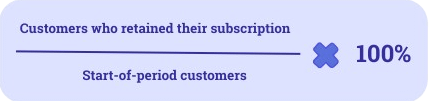
To visualize that, imagine you have 1,000 customers at the start of May. During May, you’ve gained 200 new customers. At the end of the month, you have 1,100 customers. After calculating the number of customers who retained their subscription (1,100 – 200 = 900) and dividing it by the customers from the start of the month (900 : 1,000) and multiplying it by 100, you’re left with a 90% retention rate.
Why Customer Retention Strategies Are Important for Subscription-Based Businesses?
Nothing secures business stability like a loyal customer base, ensuring predictable, recurring revenue. This makes planning future investments and any other decisions much easier. Not to mention, it also makes stakeholders extremely happy.
When it comes to key metrics, a good retention rate turns into good Customer Lifetime Value (CLV), meaning that the worth of each user will increase the longer they stay subscribed.
Last but not least, loyal subscribers mean happy customers, who leave positive reviews online and spread the word of your amazing product or service, becoming your brand’s steadfast advocates. This point is not to be underestimated; after all, 88% of consumers admit they trust recommendations from friends and family more than any type of ads.
Key Challenges of Subscription Retention
But keeping customers close is an art form that very few have mastered. The challenges are many and each presents its own set of difficulties. And the worst part is, there are no quick fixes or easy answers on how to overcome them.
Customer Churn
There are very few customers who stay with brands forever.
Customer needs and wants change overtime — and there’s nothing we can do about it. Some people feel like they’ve seen all the movies on their streaming service of choice, some realize they have way too many cosmetics gathering dust on their shelves, and others might give up on that HIIT workout and switch to live dancing classes.
There are also those whose financial situation has simply changed, forcing them to prioritize other investments and cancel the fancy yet unnecessary subscriptions. For that reason alone, some customer churn can be considered unavoidable. It’s part of business.
All these cases fall into the definition of voluntary churn, where customers make the informed decision to stop their subscriptions. Usually, that makes for 70% of overall churn; the rest is made up of involuntary churn, where the lack of funds or expired credit cards get in the way.
Industry benchmarks can help you figure out how well your business is doing. For example, a median churn rate for consumer packaged goods is around 40%, while for financial services — 19%.
And while measuring the churn rate is of utmost importance, it’s even more crucial to discover why the churn happens in the first place.
Bad Fit Customers
Sometimes, it’s just not meant to be — your customers look for a slightly different solution than the one you offer. But the problem starts when the number of such mistakes grows suspiciously high.
In such a situation, it’s good to discover the root of the problem. Why are you attracting this type of customer in the first place? Is your communication geared towards the wrong target audience, or is it too broad? Such mistakes can be extremely costly, especially when they go unnoticed.
A well-defined audience, a good understanding of customers’ challenges and pain points, as well as cohesive communication in the right places, are key in attracting the right crowd.
Bad Product
While it’s painful to admit, it’s necessary to face the truth: sometimes, it’s simply the product that’s lacking.
Maybe it’s simply not mature enough or lacks key features that truly make the difference — that’s especially important in the B2B realm.
And sometimes, it’s the value proposition that leaves much to be desired. Often enough, there’s a huge misalignment between the product and the marketing teams, leading to the classic case of overpromising and underdelivering.
Here, the only way forward is to fix what’s broken and to implement crucial features as fast as possible.
Weak Engagement
On the other hand, while your product might be amazing, its complexity might scare people off. Overwhelming users with a number of unclear features, complicated steps, and an outdated knowledge base is a recipe for disaster. The more complex the solution you offer — especially in B2B — the more important it gets to ensure proper education in various forms, from webinars and video tutorials to articles explaining different setups.
The biggest players often go as far as to create entire ‘Academies’, while some notable examples (like Dubsado or HoneyBook) offer Certified Pros to help new customers find their footing.
But the most important thing is to create a smooth onboarding process that guides the user through the key features of your tool. It may include:
- Setup wizard, which tailors the experience and adjusts the initial setup based on a short questionnaire (industry, use case, team size, goals, etc.),
- Guided walkthrough made of in-app notifications and onboarding overlays to catch users’ attention,
- Checklists for users to tick off once they have completed the described steps (they may even come with instructional videos or screenshots!),
- Dummy data for users to interact with to get the hang of the system; Zendo, a Client Portal for productized, custom, and subscription-based services, offers an entire sandbox mode to play around with.
To measure the success of your onboarding process, you need to take a closer look at customer behavior, specifically: usage patterns. Only data-driven insights — not intuition or your own preferences! — help you discover what works and what doesn’t, pointing out the moments when your users give up or succeed in their tasks. Remember, there’s never such a thing like “too much customer data!”.
Inefficient Customer Support
It’s okay if it takes a while to get any information about a new feature or a product in the case of a B2C subscription business. But in B2B? That’s unacceptable.
After all, your potential clients aren’t the ones being directly hurt by a slow platform, persistent bug, or sudden downtimes — it’s their own clients who bear the brunt of those issues. And if they keep losing them due to bad experience, obviously they will look for an alternative subscription management platform.
That’s why having a well-trained customer service team is so important. They need to reply in a professional manner as soon as possible, acting genuinely helpful and knowledgeable. And when some issues can’t be fixed at once, clients should be updated on any progress with the bug, even if it’s to say “we’re still working on it!”.
💡 According to HubSpot, 82% of consumers treat an “immediate” response as important when they have a marketing or sales questions. Meanwhile, according to Zendesk, 73% of consumers will switch to a competitor after multiple bad experiences — which may include lost tickets or slow response times.
5 Key Customer Retention Strategies for Subscription Business
What can be done to keep your customers engaged? Let’s skip hypotheticals and jump to real customer retention efforts used by well-known companies.
1. Deliver Consistent Value like Dropout
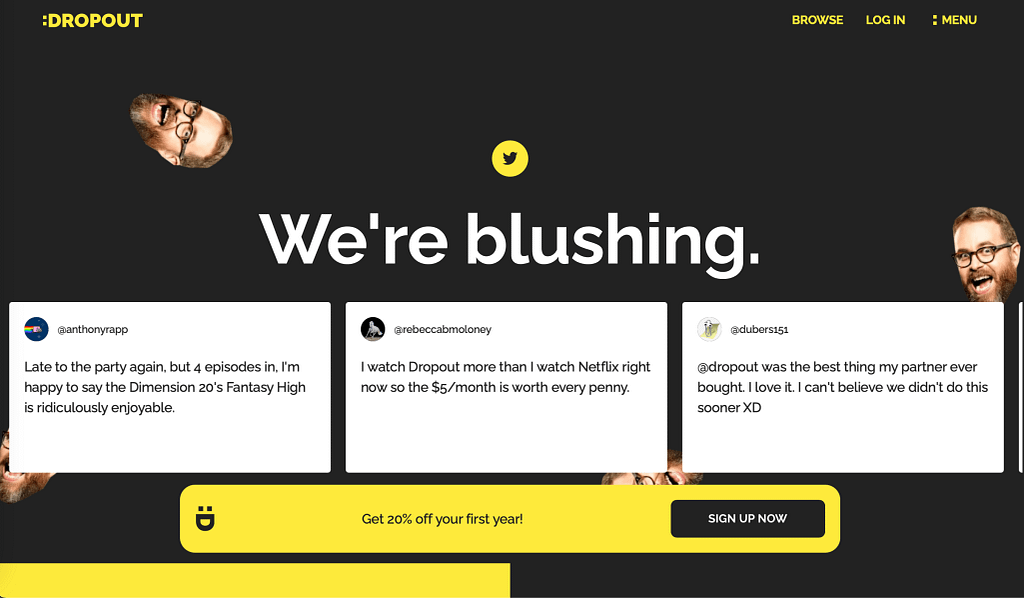
Dropout is a comedy subscription streaming service that stands out from its competition.
First of all, it’s ad-free, which is quite a feat in the business world. Secondly, it focuses on a niche, choosing to be a big fish in a small pond rather than trying to make everyone subscribe by offering every possible type of content. And most importantly, it only costs $6.99.
And compared to such streaming giants like Netflix or Amazon Prime, Dropout is consistently delivering productions of similar value, sticking to its identity and never straying from the original value proposition. It also helps that bits from their various shows keep going viral on social media, leading to being discovered by new target audiences organically.
2. Ensure Personalized Experience like Spotify
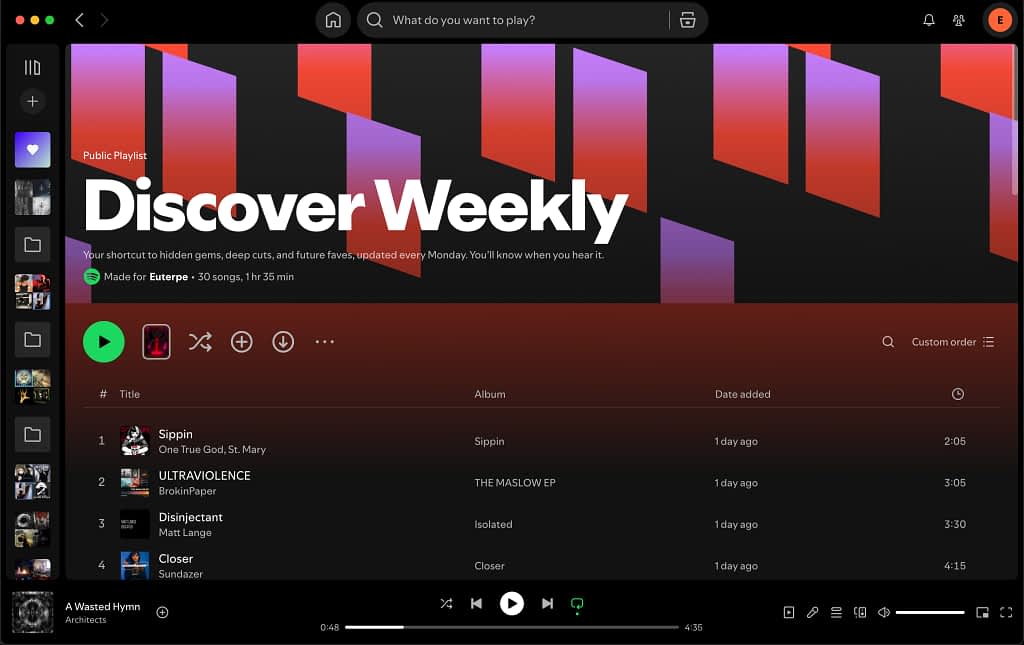
Spotify, a household name for streaming music, has pioneered personalization in places never thought of before. Recommending new songs or artists isn’t a new idea — but Spotify’s design team went one step further, delivering personalized playlists (called Discover Weekly) thanks to AI and machine learning capabilities.
Soon, it was followed by Blend, combining the music tastes of all invited people into the setlist.
Last but not least, there’s a DJ, who, in addition to offering suggestions, provides insightful facts about the music, artists, or the genre, using a dynamic AI voice to bring the text to life.
Such complicated ways of recommending new music have paid off, helping Spotify increase its user base to 600 million users and revenue to $14 billion.
3. Offer Flexible Pricing Options like Orange
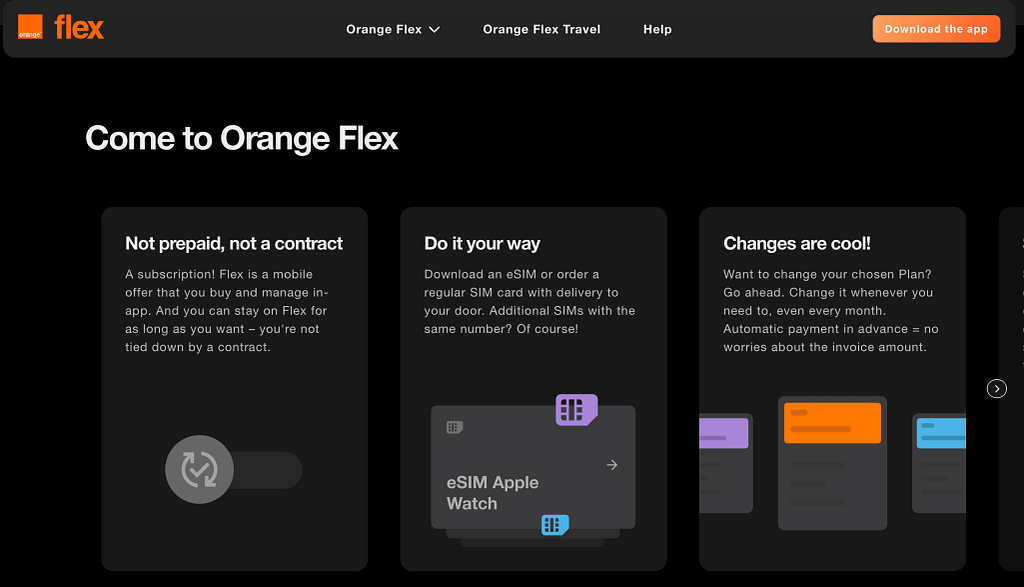
Orange, a French multinational telecommunications corporation, has decided to deal with the consumers’ most common pain point: long-term, lock-in contracts.
In short, companies give consumers no real choice but to sign up for at least a year of their telecommunication service, with little to no wiggle room when it comes to adjusting the chosen digital bundle. This means that even if the service seems beneficial at first, it may no longer be so after several months — leading consumers to pay more than the market rate.
To address that problem, Orange has came up with a new service, called Orange Flex. It introduced subscriptions instead of prepaid and contracts, allowing new clients to set up their phones in less than 10 minutes from the comfort of their own homes, without a face-to-face verification. Moreover, clients can upgrade or downgrade their plans themselves, instead of calling the service provider. And there are no invoices, to boot!
Jean-Francois Fallacher, Orange Poland CEO, summed it up nicely: “What we are doing with Orange Flex is Uberizing telecoms”.
4. Reward Loyalty like North Face
Having a loyalty program is a proven way of retaining subscribers. But collecting points and exchanging them for meagre discounts isn’t enough — just like with subscriptions themselves, you need a really strong value proposition to attract clients.
Let’s take a look at North Face’s loyalty program to see what the gold standard is:
- Easy point system: some companies really do overcomplicate this point, forcing consumers to do some heavy math. Meanwhile, North Face rewards each dollar spent with one point earned, with 100 points being worth $10.
- Free shipping: each order comes with no additional fees for shipping, making shopping all the more attractive.
- Birthday gifts: members can count on the company to send their best wishes along with a nice gift.
- Early access: members can also get access to exclusive and limited collections much faster than the rest of the clientele, making the deal so much sweeter.
- Members-only field testing: last but definitely not least, clients can test their purchases to see how they perform in real-life circumstances. Now that makes the offer hard to resist!
Customer expectations get higher and higher regarding loyalty programs. The novelty has worn off a long time ago, so it takes a really special program to catch attention and sustain it.

5. Build an Active Community like Lego
Another way to spark proactive engagement is to create a strong community to help connect like-minded individuals, give them space to share advice and personal stories, hold competitions and giveaways, and maybe even create online or live events.
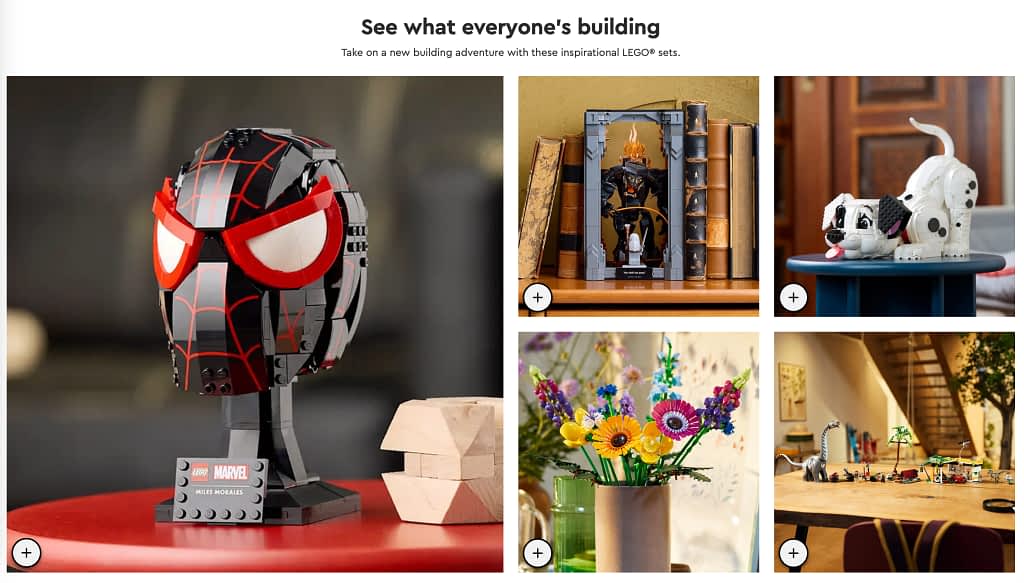
The one company that managed to avoid bankruptcy by embracing community-led growth is one of the household names — LEGO. Upon discovering that 70% of their clients are adults instead of children, their original target audience, the first reaction was to switch tracks, but thankfully, Lego has realized the huge potential it represents. Listening to customer feedback during live events and meeting with clients face to face helped them understand their needs, leading to long-term success.
Here are just some examples of how LEGO nurtures its rich and vibrant community:
- Co-creation through user panels: the team consults the consumers during user panels to help refine the development of new products.
- LEGO Ideas: this initiative encourages fans to submit ideas for new LEGO sets on their website, resulting in 4 fan-inspired products per year being released.
- BrickLink: on this fan-driven marketplace, clients can find missing pieces for their sets (instead of forcing fans to buy entire new sets), as well as get rare and vintage sets.
Win Customer Loyalty For Ever with Zendo
If you want to maximize revenue and ensure business growth, you shouldn’t only focus on customer acquisition, but also on nurturing and growing an engaged customer base. By providing proactive customer support, building an active community, rewarding loyalty, and delivering personalized and consistent value, you can boost retention by leaps and bounds.
The art of subscription business models isn’t to bait customers with vague promises and then watch them leave — the goal should be to deliver such an impressive customer experience. In such a scenario, people will stick with your service for years to come, stabilizing your revenue and bringing predictability to your business.
If you want to get steady support in your mission to foster loyalty and up your subscription retention rate, you can do so alongside Zendo. This Client Portal, doubling as a subscription management platform, can help you create an amazing customer experience through flexible pricing, smooth onboarding, and an easy, transparent way of sharing information, files, and messages.
And the best part? You don’t have to guess if Zendo’s going to be a great fit. You can try it out yourself, entirely for free and without providing any credit card details, with no time limits to restrict you. Spoil your clients rotten by signing up for Zendo today!
FAQ
What are 3 R’s of Customer Retention?
The 3 R’s of customer retention refer to retention, related sales, and referrals — three key strategies that help businesses retain customers and improve subscription growth.
What are 8 C’s of Customer Retention?
The 8 C’s of customer retention — Customer-Centric Culture, Communication, Consistency, Customization, Care, Connection, Convenience, and Commitment — represent core principles for building long-term customer loyalty.
Is Customer Retention Rate KPI?
Yes, Customer Retention Rate (CRR) is a KPI that helps businesses measure how well they keep customers over time. Monitoring and optimizing CRR can significantly enhance customer loyalty, improve retention, and drive an increase in repeat customers, all of which contribute directly to revenue growth.
What is Good Customer Retention Rate?
A good customer retention rate varies by industry, but generally, rates above 85–90% are considered strong, especially in a retention subscription model. High retention indicates a base of satisfied customers who continue to engage with your product or service over time. This is crucial because retaining existing customers is typically more cost-effective than acquiring new ones, helping to lower customer acquisition costs.
What is Good Customer Retention Rate for SaaS Company?
For a SaaS company, a good customer retention rate typically falls between 85% and 95% annually, depending on the customer segment. High retention is a sign of customer satisfaction and effective proactive support, both of which are essential for success in a retention subscription model.
What is Good Churn Rate for Subscription Services?
A good churn rate for subscription services typically falls between 2% to 8% monthly, depending on the industry and customer type. Lower churn is ideal and often reflects strong customer satisfaction, effective onboarding, and reliable ongoing support. Monitoring subscription retention data is essential to understand why customers leave and how to improve retention strategies.