When Getir, the ultrafast grocery app, noticed a significant portion of its users had gone inactive, they faced a common challenge: how to re-engage “hard churned” customers who hadn’t ordered in months or even a year.
Instead of sending the usual promotional emails, Getir worked with email strategist Oli Clifford to craft a creative re-engagement campaign.
How did it end you may ask?
Over 300 previously inactive customers placed orders, generating £6,000 in revenue, all without offering a discount.

By using a mix of surprise, reframed value, and FOMO, Getir reminded customers why they loved the app in the first place and showed what they were missing. This case highlights how thoughtful, tailored winback strategies can turn lost customers into returning ones—and why creativity matters in customer re-engagement.
But with customer winback, we have to start from the beginning.
What is Customer Winback?
The customer winback term is pretty self-explanatory. It means exactly what you think it does: winning back someone who was a previous customer after they churn, aka, stop using your product or service.
What’s not self-explanatory, though, is how exactly you are supposed to win back lost customers. After all, they churned for a reason, whether it was price, a bad experience, or just losing interest.
And yet, those same people are often your best shot at growth: they already know your brand, they’ve used your product before, and they’re much cheaper to re-acquire than finding a brand new customer.
Why Customer Winback is More and More Important?
Tackling customer loss and trying to win them back is important as it pushes you into a reflection on why your customers churned, which may bring conclusions for improving your product, services, or how you market them, or how you communicate with clients — all of which can cause changes that boost profitability. But let’s get deeper into it with numbers and facts.
First, churn.
A survey presented in the CallMiner Index in 2018 shows that U.S. businesses lose $136 billion a year due to avoidable customer churn. How? 85% of adults said they switched suppliers 1.81 times in the last 12 months, with “switching,” meaning customers leaving suppliers because of dissatisfaction, rather than for unavoidable reasons.
Second, customer retention.
Study conducted by the inventor of the Net Promoter Score himself (we’ll dig into NPS furhter down the article), shows that increasing customer retention rates by just 5% increases profits by 25% to even 95%.
Third, market saturation.
When markets get crowded, customers can easily find similar products/services elsewhere. If they feel under-served, they know they have options, so the “switching cost” drops dramatically.
⚠️ A Simon-Kucher’s Global Telecommunications Study (2023) shows that willingness to churn is reaching all-time highs. What’s more, ~60% of broadband/mobile customers say customer satisfaction is the main reason they stay with the provider.
Put together, these numbers point to one thing: ignoring lost customers is leaving money on the table. And that’s one thing you don’t want in business, so let’s see how to actually win back lost customers.
How to Measure Success of Customer Winback Campaign?
You can’t improve what you don’t measure. And with winning back lost customers, you can track a lot to help you be better and win more money.
But the first step is deciding who actually owns the winback metrics—marketing, customer success, leadership, sales, or even product. In reality, it usually works best as a shared responsibility, since churn is rarely caused by one team alone.
When it comes to measurement, don’t stop at just tracking churn, though. A strong winback campaign should be judged against a stack of metrics that tell the full story, from reactivation to long-term loyalty.
Here are the most common metrics to track and who usually owns them:
| Metric | What It Measures | Why It Matters | Typical Owner |
|---|---|---|---|
| Winback Rate | % of lost customers reactivated | Your baseline success metric. Shows how effective the campaigns are at bringing people back. | Marketing (campaign execution) + Customer Success (outreach) |
| Revenue Recovered | Sales or MRR regained from returnees | Direct impact on business performance, hard dollars saved. | Finance (reporting) + Sales/RevOps (tracking MRR/ARR) |
| Retention Over Time | How long won-back customers stay the second time | Reveals whether your fixes are “sticky” or if customers churn again quickly. | Customer Success + Product (engagement analytics) |
| Customer Lifetime Value (CLV) Uplift | Difference in lifetime value of won-back customers vs. new customers | Helps justify investment in winback vs. acquisition. | Finance (modeling) + Marketing (budget justification) |
| Loyalty Signals | NPS, CSAT, repeat purchases, referrals | Goes beyond transactions to measure advocacy and satisfaction. | Customer Success (surveys) + Marketing (referrals, advocacy) |
Together, these paint a complete picture of whether your winback efforts are driving sustainable growth—or just generating short-term spikes that look good in a dashboard.
Winning Back Lost Customers – 7 Proven Strategies
Let’s now go right into actual strategies showing how you can do the things you want to measure later.
1. First, Learn What Made Them Go
Before you try to win customers back, you need to understand why they left in the first place. Otherwise, you’re just guessing and risk repeating the same mistakes.
There are a few proven ways to capture this feedback and they all lead to using the simplest tool of them all: a survey.
Here are the best lost customer survey types (and beyond) you can use in this case:
- Exit intent surveys: triggered during the cancellation process (“What made you leave?”). Keep them short, ideally 1–2 multiple-choice questions with an open text option to capture more than the options you suspect as probable for customers to choose and make the feedback higher-quality.
- Post-churn surveys: sent after customers canceled their subscription or didn’t order anything new in a while, usually via email. Great for catching the reasons people didn’t share during cancellation.
- Always-on feedback buttons: small but visible widgets in-app, in emails, or on your website. They capture frustration early and sometimes prevent churn altogether.
- Customer success & loyalty metrics: like we mentioned in the metrics section above, tracking customer success and customer loyalty through NPS or CSAT surveys helps you find dissatisfied customers quicker. Any dips in the NPS and CSAT scores, reduced logins, or declining order frequency are early warning signs. If you track these, you can learn patterns in why people disengage.
| Survey Type | Typical Question |
|---|---|
| NPS (Net Promoter Score) | “On a scale of 0–10, how likely are you to recommend our product/service to a friend or colleague?” |
| CSAT (Customer Satisfaction) | “How satisfied are you with your recent experience with us?” (Usually 1–5 or 1–7 scale) |
| Exit-Intent | “Before you leave, can you tell us why you’re leaving?” or “What could we have done to keep you?” |
| Post-Churn / Winback | “What was the main reason you stopped using our product/service?” |
| Feedback Button / In-App Feedback | “Do you have any feedback or suggestions to help us improve?” |
👉 Pro tip: don’t just collect the customer data, categorize it. Group reasons into buckets like price sensitivity, missing features, bad experience, lack of engagement. Over time, patterns will emerge, giving you the roadmap for both fixing the root issues and crafting more tailored winback campaigns.
2. Segment Lost Customers
The pro tip from the previous section takes us right into the next strategy you can use to win back former customers.
Because not all churn is created equal.
Treating every ex-customer the same is like throwing money into the wind. Some left because of a credit card failure (easy winback). Others left because they fundamentally didn’t see value in your product (much harder). Your job is to segment churned customers by type so you can prioritize the ones worth chasing and apply the right customer win back strategies to fit their case.
Here are the most common churn buckets:
- Involuntary churn: payment issues, expired cards, failed renewals. Usually, the easiest to win back is with simple reminders or updated billing flows.
- Price churn: customers who left because they couldn’t justify the cost. Winback may require you to encourage customers to come back with discounts, flexible pricing, or demonstrating more ROI.
- Value churn: people who didn’t see enough benefit, or found a better alternative. Hardest group to recover, but sometimes possible if your product has improved or their needs have shifted.
- Experience churn: customers who left due to poor support, bugs, or onboarding struggles. Can often be recovered by showing you’ve fixed the pain points.
👉 Pro tip: prioritize “high-value, high-probability return” customers. Look at past spend, usage frequency, and lifetime value. Cross-check with reason for churn—someone who loved the product but balked at price is more winnable than someone who never engaged at all. Finally, segment communications accordingly (e.g., a payment reminder email vs. a “see what’s new” feature update).
3. Personalized Re-engagement Campaigns
Once you know why customers left and have segmented them, it’s time to reach out and really try to get back these lost clients.
But remember: generic “we miss you” emails rarely work. Customers don’t care that you miss them, especially lapsed customers, they care about what’s in it for them.
That’s where personalization comes in. Your re-engagement campaigns should connect directly to their past behavior, needs, and pain points to really make customers feel valued and appreciated.
Campaigns that can work:
- Emails/SMS tailored to past usage: send email campaigns for lost customers and remind them of the exact product or feature they used most and highlight the benefits they got out of using that product/service/feature, showing valuable insights. Sample email to win-back old customers could be: “You saved 20 hours last month using [Feature]. Here’s what’s new to make it even better”.
- AI-driven product recommendations: use past purchases or activity to recommend relevant add-ons, upgrades, or complementary services.
- Behavior-triggered outreach: if they open a re-engagement email but don’t convert, follow up with a different angle (social proof, discount, or feature update).
- Personal touches: a short note from a Customer Success rep, especially for high-value accounts, can cut through the noise and make churned or inactive customers feel cared about. Really take your time to craft these messages based on the history with former clients (for high-value accounts, it is profitable to take all the time for truly personalized messages).
- Dedicated targeted LinkedIn ads campaigns: retarget churned or inactive customers with personalized ads that remind them of your value. For example, highlight a new feature, a popular product they used before, or a relevant case study. LinkedIn allows precise segmentation by industry, role, company size, and even exact lists of companies/accounts, so your messaging feels relevant and timely rather than generic.
- Outbound reach out: use personal, one-to-one messaging at scale. Send tailored emails from real people, like a Customer Success manager, Marketing lead, or even the CEO—drawing on the recipient’s history with your product or service. For instance: “Hi [Name], we noticed you loved [Feature]. Here’s a quick tip on how you can get even more value this month”. The key is personalization: the more the message reflects the customer’s actual usage and relationship and their reason for churning, the higher the chances of re-engagement.
👉 Pro tip: combining the feedback you collect in the first step (learning why past customers churned in the first place) with the re-engagement campaigns is how you take it all to the next level. Especially so if you automate the process. For example, integrate your customer feedback or survey tool with the customer engagement/communication tool you’re using and set up automated re-engagement workflows to be triggered after receiving feedback from churned customers.
4. Enhance the Customer Experience
Winning a customer back is only half the battle.
The real challenge is making sure that returning clients don’t leave again. That’s where experience improvements come into play—showing returnees that things will be better this time (especially if their reason for leaving was poor experience with the product or the team).
Here’s how you can improve the experience for lost, coming back, and existing customers to make sure they’re fully satisfied.
Improved onboarding for returnees
Don’t treat winback customers as brand-new users. Instead, design a “welcome back” flow that highlights what’s changed since they left and fast-tracks them to the value they care about.
Self-service portals & knowledge bases
Many customers churn because finding answers was too hard. From just browsing existing vendors (78% of customers buy from the vendor that responds to their inquiry first) to being an active user who’s in need of answers.
A clear, easy-to-navigate client portal (with tutorials, FAQs, and guides) removes all the friction and gives customers an easy way to find what they need.
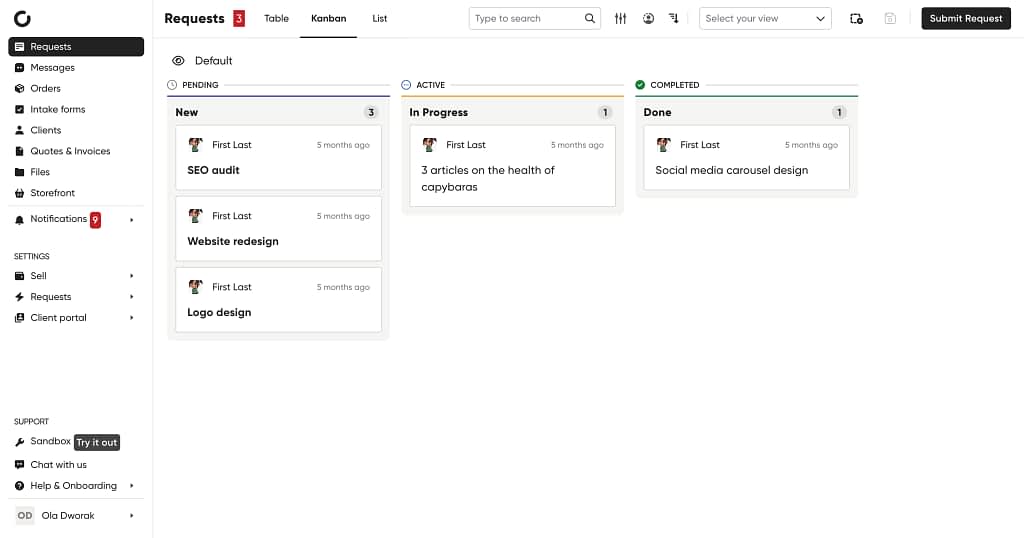
For example, with Zendo your customers can:
- Quickly access all documents and files in one client profile, so they don’t have to dig through emails or multiple platforms.
- Track the status of requests or quotes with custom fields and progress indicators, keeping them informed without repeated follow-ups.
- Browse a fully searchable service catalog to explore and order services independently, reducing reliance on support tickets.
- Receive real-time notifications for updates on their requests, payments, or shared files, so no important information is missed.
- Easily reach out to your team through a built-in chat,
- Finalize payments,
- Download completed orders,
- And more.
All on a completely secure platform that customers can log into.
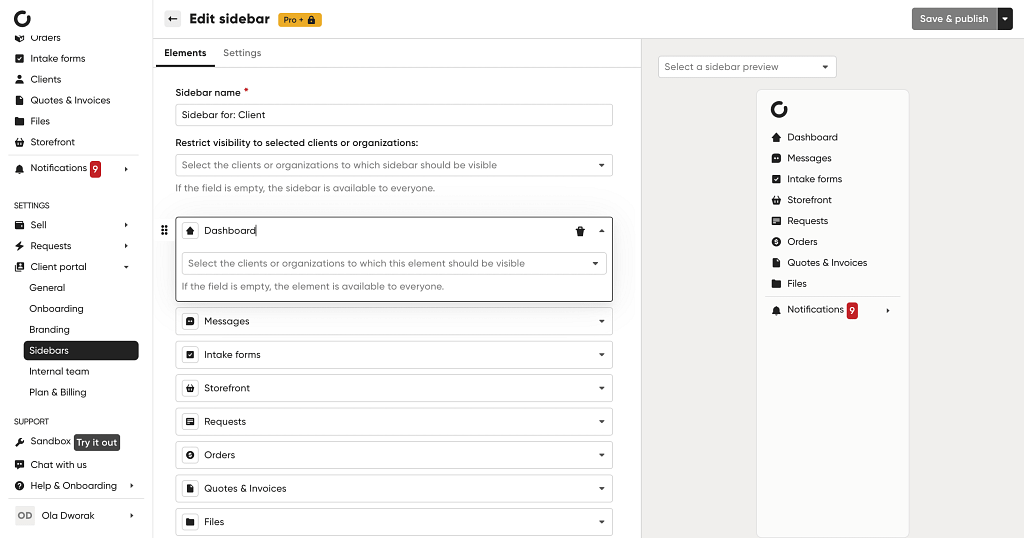
What’s more, you can fully customize the client portal on a per-client basis, ensuring that: a) customers feel valued and b) they see only what’s relevant to them.
Proactive Customer Success outreach
Going further, for higher-value accounts, assign a success manager to check in early. Even a short “How’s it going this time around?” email can signal that you’re invested in their success.
Intuitive UI
Besides a good, accessible, and tailored client portal, your customers also require intuitiveness across any and all touchpoints they experience with your business. From your homepage to the tool you’re offering to the service you’re performing.
Research shows that just a 1-second to 10-second increase in mobile page load time leads to a 123% higher bounce probability. Take UI and intuitiveness seriously.
👉 Pro tip: don’t sit back and relax just because a lost customer has come back. After winning them back and improving their experience (hopefully), ask for feedback again. Make sure to compare their answers, track if they’re satisfied, and if not, take appropriate action to help retain existing customers.
5. Social Proof & Community
Sometimes, the reason a customer churned wasn’t about your product at all—it was about trust, relevance, or simply forgetting you exist.
That’s where social proof, community, and consistent brand activity come in. Showing that others like them are succeeding—and reminding them your product is still relevant—can motivate returnees to give it another shot.
Tactics to use here:
- Share success stories and reviews: highlight case studies, testimonials, or user-generated content that matches the segment you’re targeting. For example, if a small business left due to perceived complexity, share a story of another small business that achieved results after returning.
- Invite them back to community events: webinars, virtual meetups, or user groups can re-engage customers by showing them the product ecosystem.
- Showcase advocacy: share posts from loyal customers or encourage returnees to participate in feedback panels or beta programs. Feeling part of a community reinforces trust.
- Brand touchpoints & reminders: regular brand activities—social media updates, newsletters, or even retargeting campaigns—keep your product top-of-mind. Even a simple “here’s what’s new since you left” message can spark re-engagement.
👉 Pro tip: tailor your outreach to the churn reason. If someone left due to value concerns, focus on ROI stories. If they left due to forgetting about you, highlight new features, updates, or product launches (especially across newsletter messaging.)
6. Close the Product/Service Gaps
Sometimes customers churn because your product or service didn’t meet their needs—or didn’t meet them well enough. If you want them back, you need to show them you’ve fixed the problems that drove them away.
To help fight that type of churn, you can:
- Show tangible improvements since they left: send out a newsletter campaign where you highlight new features, performance upgrades, or service enhancements. Make it clear that these changes address the specific pain points that led to churn.
- “You asked, we fixed” campaigns: personalized communications that demonstrate responsiveness can be powerful. Example: “We heard your feedback about [Feature X]. Here’s how we improved it for a smoother experience”.
- Highlight benefits, not just features: don’t just list updates, though. Show how these improvements directly enhance their workflow, save time, or increase ROI.
- Use multiple channels: emails, in-app notifications, or webinars can all showcase updates and improvements to different segments of returnees.
👉 Pro tip: make it personal. If you know the exact reason a customer left, reference it. A message that says, “We fixed what caused you to leave” resonates far more than generic feature announcements.
7. Offer Discounts
Lastly, one of the win-back campaigns you can use to revive dormant customers is to offer incentives, special deals, or discounts.
We want to highlight one thing, though.
Even though discounts can be a powerful tool to win back customers, they should be used strategically.
While they can provide a quick incentive for return, they may not address the underlying reasons for churn. Use them thoughtfully to avoid devaluing your brand or just reaching a short-term win and then losing the customers again after the special deal wears off.
When applied strategically, you can use:
- Targeted offers: provide discounts to specific segments based on their previous purchase behavior or engagement level.
- Time-limited promotions: create urgency with limited-time offers to encourage immediate action.
Especially so if the reason for churn was your product or service being too expensive.
For example, H&M, a fashion brand, to revive sales and attract customers back from competitors like Zara and Shein, increased the number of discounted items in their stores. This strategy aimed to boost customer interest and sales growth.
👉 Pro tip: use discounts as a part of a broader win-back strategy that includes addressing customer concerns, improving the product or service, and re-engaging through personalized communication.
Customer Winback Mistakes to Avoid
While you’re at winning back lost customers and applying the best strategies, be sure to learn from the mistakes others have already made.
Avoid the following to help keep the number of active customers as high as possible.
| Mistake | Why It’s a Problem / How to Avoid It |
|---|---|
| Asking for feedback only once | Churn is often gradual, not a single event. Continuous feedback loops help spot issues early and prevent customer loss. |
| Blasting generic “we miss you” messages | One-size-fits-all emails don’t resonate. Segment your audience to make outreach relevant and increase re-engagement. |
| Over-automating communications | Templated messages feel impersonal and are easy to ignore. Blend automation with thoughtful human follow-up, especially for high-value accounts. |
| Reintroducing customers to the same experience they left | If nothing has improved, they’re likely to churn again. Highlight product updates, new features, or improved processes. |
| Assuming customers will notice improvements on their own | Even meaningful upgrades may go unnoticed. Actively communicate changes that matter to the user. |
| Slapping a discount on and calling it a day | Discounts are often short-term fixes and don’t address underlying issues. Only use price incentives if feedback confirms it’s the main barrier. |
| Over-discounting | Constantly reducing prices can erode brand value and set wrong expectations. |
Make your Clients Your Brand Advocates with Zendo
Turn satisfied and returning customers into loyal advocates by giving them an exceptional, frictionless experience.
With Zendo, you can centralize communication, share files, automate quotes and payments, and provide fully personalized client portals—all designed to make your customers feel valued and informed.
Happy clients stay longer, re-engage faster, and naturally promote your brand through referrals, testimonials, and word-of-mouth.
Give Zendo a try, completely free of charge (no credit card required) and build experiences your customers won’t let go of.
FAQ
How to Avoid Losing Customers to Your Competitors?
Focus on delivering a seamless customer experience, proactively addressing pain points, and making support and answers easy to access. Tools like self-service portals, knowledge bases, and clear communication help customers get what they need quickly, reducing the temptation to switch. Segment customers, track feedback continuously, and fix the root causes of dissatisfaction before they churn.
How to Keep Customers Coming Back?
Win back and retain customers by personalizing re-engagement campaigns, showing tangible improvements, and maintaining ongoing value. Use targeted emails/SMS, AI-driven product recommendations, behavior-triggered outreach, and proactive Customer Success check-ins. Keep the experience intuitive, provide timely updates, and make sure to use social proof and community to reinforce trust.
What are 3 R’s of Customer Loyalty?
Winning customer loyalty is often connected with the 3 r’s of customer loyalty:
✔️ rewards: offer incentives like discounts, exclusive deals, or loyalty points to encourage repeat business and show customers that their loyalty is valued with your loyalty program.
✔️ relevance: deliver personalized experiences, products, and marketing messages that match each customer’s specific needs, preferences, and behaviors.
✔️ recognition: acknowledge and appreciate your customers through thoughtful gestures, personalized communications, or special offers that make them feel seen and valued.
How to Create Customer Loyalty Marketing Strategy?
First, collect ongoing feedback with surveys and track key metrics like NPS, CSAT, and retention. Then, segment your audience to tailor the loyalty program campaigns. Third, personalize communication and engagement based on past behavior, needs, and customer feedback from surveys. Fourth, showcase improvements, product updates, and success stories. Fifth, use incentives strategically, like targeted offers or limited-time promotions, without eroding brand value. And lastly: maintain consistent brand touchpoints and create a sense of community to reinforce loyalty.