Just a few years ago, the subscription business model was praised to the heavens as one of the smartest ways of securing a steady, recurring revenue. But times have changed; consumers suffer from subscription fatigue, rolling their eyes and sighing in defeat when finding yet another unnecessary subscription service. Now, businesses need to work harder to gain trust and secure customer loyalty, convincing their target audience of the benefits of subscribing.
In this article, we’ll go over the most effective strategies for building a successful subscription business, including advice on how to sell a subscription service that retains clients long-term.
Are Subscription Plans Still Worth It?
First, let’s check what the data says about this business model’s profitability. Should businesses switch back to offering one-time purchases instead?
According to Recurly’s 2026 State of Subscriptions report, while subscriber acquisition is no longer growing at the breakneck speed, it didn’t fall down either. It remains steady instead, with 67% of consumers choosing to maintain 1-4 subscription plans.
Businesses can no longer count on their clients to sign up and forget about recurring payments. Now, people are more closely watching over their accounts, with 38% of consumers canceling subscriptions they no longer use.
According to Morten Suhr Hansen (CEO & Senior Partner at Subscrybe), the key competitive factor in 2026 is providing “relevant and lasting value — documented over time”. The SaaS market has turned into a fiercely competitive environment with no quick wins in sight. Now, businesses need to nurture their existing customer base instead of trying to make it grow substantially.
To sum it up, yes — building a successful subscription business is still possible. But the rules of the game have changed, with businesses racing to offer the best perceived value for the best money. It’s no longer about reaching new audiences, but rather about retaining the existing one.
Selling Subscriptions Online in 13 Steps
If that hasn’t scared you off, let’s see what needs to be done to help your subscription-based business thrive.
1. Say Hello to Competition
If you had a genius idea while taking a shower, don’t rush to your computer to make it happen. First, you need to check if anyone has done it already, whether they have succeeded or failed — and why — and if there’s even a true need for what you want to offer.
Quibi is one such company that forgot to do their homework. Despite raising nearly $1.8 as a startup, it has died in just 6 months due to its inability to understand the market needs.
The idea behind the company was to create premium and short-form streaming content to watch on the go on mobile. But who would pay for the service, if an average consumer is already hooked on Instagram Reels and TikTok Videos?
This approach could have worked if it addressed common frustrations associated with existing streaming services, such as content fragmentation or difficulty discovering new content.
Here’s a lesson for everyone: changing consumer behavior is extremely difficult and requires time. It’s easier to tap into what’s already happening and remove the friction than to try to force people to do things your way.
🎯 What to do:
- Research the market to check for saturation, competitiveness, and existing demand for this type of service
- Learn from other people’s successes and mistakes
2. Understand the Audience
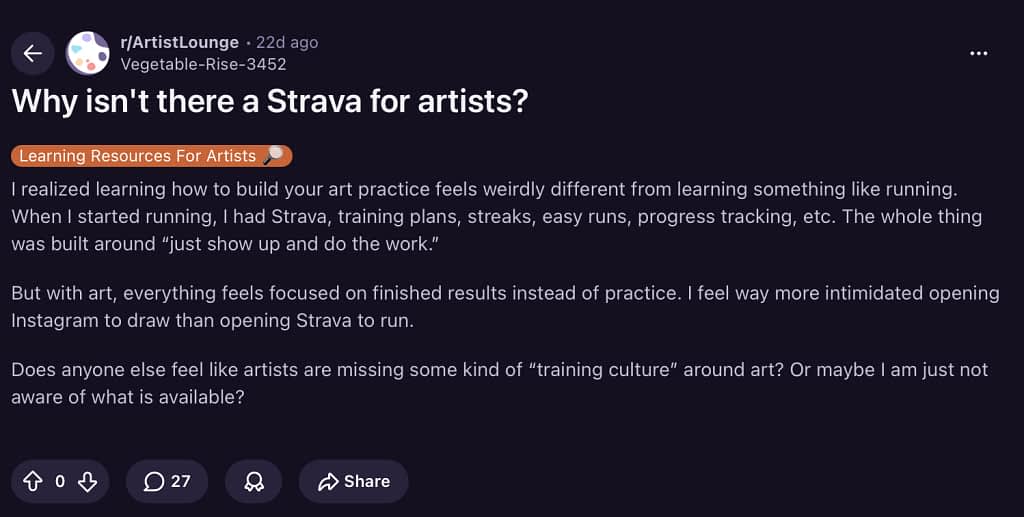
Especially with the LLMs and AI tools on the rise, more and more entrepreneurs come up with solutions that no one even asked for. Sadly, people take the backwards approach of designing a tool and only then looking for potential customers, while it should be the other way around. Frequent Redditors know just how annoying such entrepreneurs can be.
Another example of not being able to read the room comes from CLIP Studio Paint. This SaaS software for artists was known in the art community as an affordable and ethical alternative to Adobe, the company that keeps getting roasted on Twitter, particularly for the AI features. That’s why, when CLIP Studio Paint announced their newest feature — “Image Generator palette” — no one but the company was surprised by the immense backlash, leading them to discard the feature after just a few days.
Last but not least, Metaverse’s spectacular failure is also something to keep in mind. The $73 billion loss stemmed from a failure to connect with everyday consumers, overestimating people’s enthusiasm for spending even more time in virtual meetings, cute avatars or not.
🎯 What to do:
- Get to know your audience, ideally through interviews and spending time in the community
3. Shape Your Offer
Now that you know your idea has merit, it’s time to whip it into an attractive shape. There are several things to consider, including:
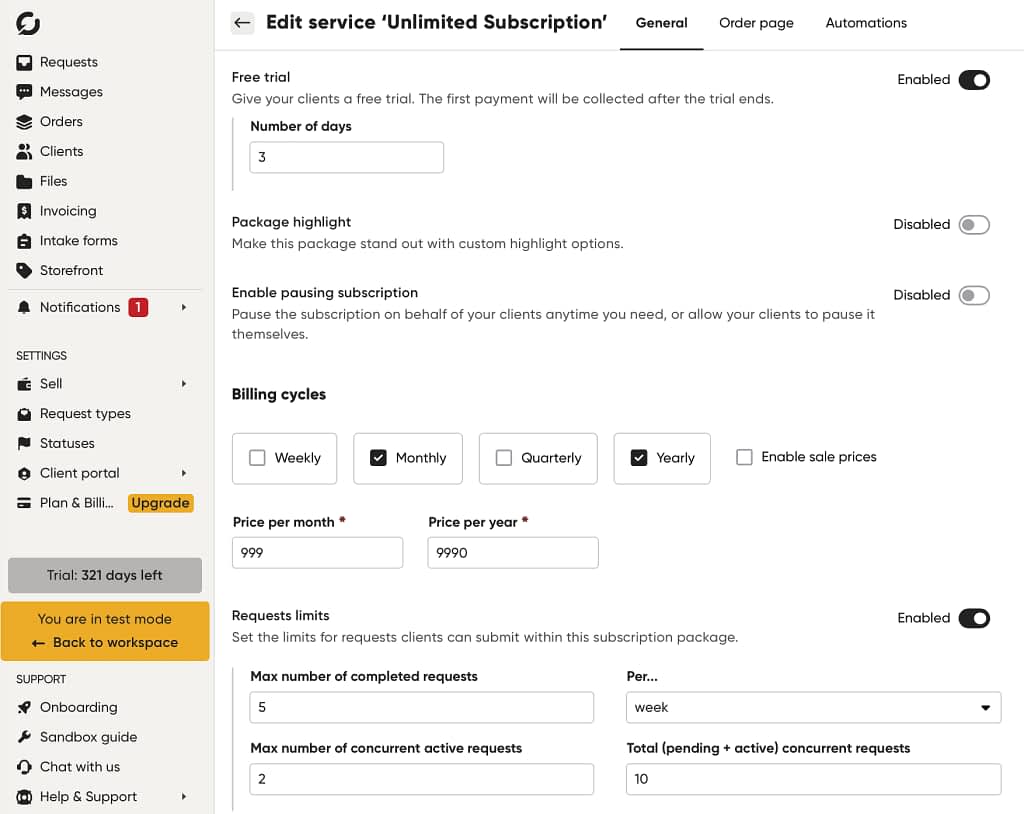
- Different pricing tiers: not every customer has the same needs or budget. Offering multiple subscription tiers for different customer segments (for example: Basic, Standard, and Premium) helps you appeal to a broader audience while giving customers the option to pay for the level of service that suits them best.
- Free trial periods: for first-time customers, committing to a subscription or a membership can feel like a leap of faith. A free trial lowers the barrier to entry and lets you curate the very first impression of experiencing the value of your product or service.
- Subscription pause: some customers may only need your services seasonally or may face temporary interruptions, such as holidays or slower business periods. Allowing them to pause their subscription helps preserve the relationship and reduces the likelihood of a high churn rate.
- Clearly defined subscription limits: flexibility is great, but it shouldn’t come at your expense. Clients will sometimes ask for “just one more thing”, be it an extra ticket or an additional request. On their own, these requests may seem harmless, but over time they can significantly increase your workload. Setting clear limits from the start helps prevent misunderstandings and ensures that additional work is compensated fairly.
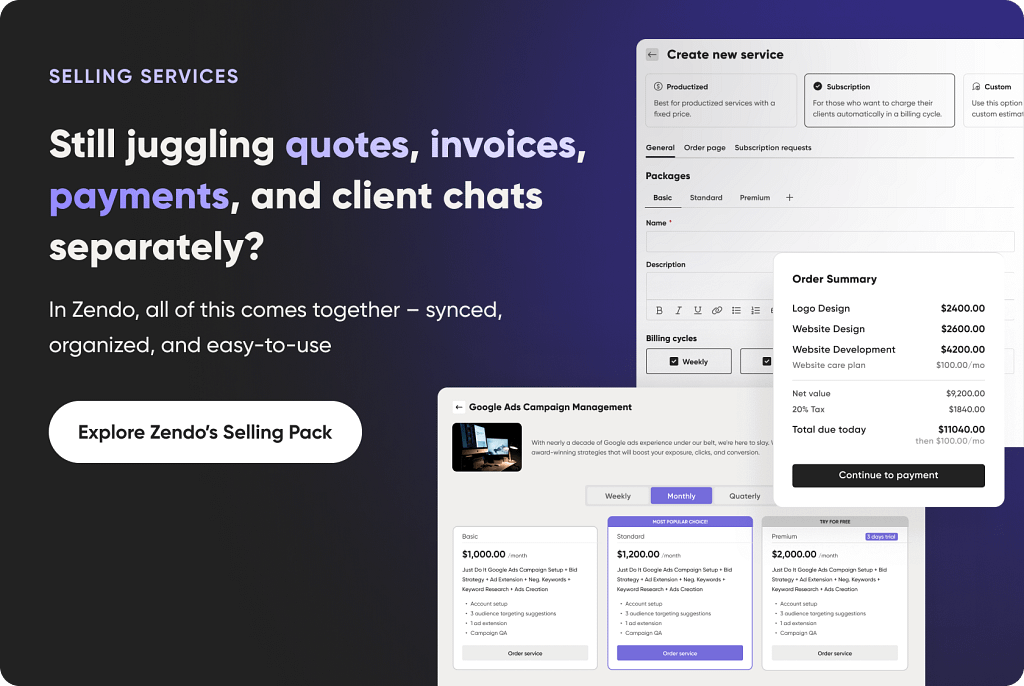
As you can see, there are many factors to consider. To make it easier to manage, you can invest in a business management platform that also supports the subscription model — like Zendo. There, you can set up the entire workflow with just a few clicks, ensuring fair workload and convenient benefits to all.
🎯 What to do:
- Diversify your offer by including various tiers, trial periods, and discounts
4. Shape Terms & Conditions
No matter how complex or simple your offer will turn out to be in the end, the most important part is transparency. You need to clearly explain all the terms and conditions to make sure everyone stays on the same page. This will help you avoid any disputes, especially if you face bad actors that want to squeeze every penny out of you.
One of the important points is the renewal process. If you try to hide it, counting on the automatic workflow to charge your clients without them none the wiser, any good will might turn into resentment. Stay as transparent about the process as possible, sending out reminders as a helpful, caring professional.
Another one is canceling the subscription. Some companies complicate it on purpose, hoping it will deter clients from following it through. Only household names can afford that move though, so let your clients know exactly how they can approach the topic. Otherwise, they might feel like they’re being treated unfairly.
🎯 What to do:
- Clearly define terms and conditions, including the renewal and canceling process
5. Shape Your Pricing
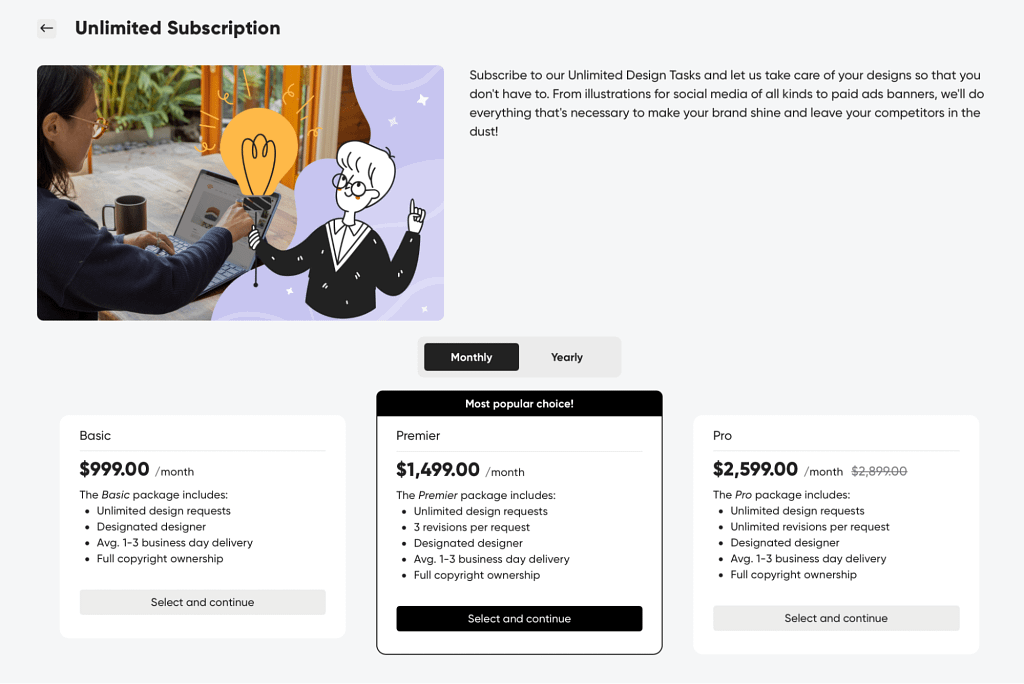
Next on the list is figuring out your pricing. Here, the most important part is research — seeing what your competition is up to and what you’re up against. This will also give you an insight into what’s needed to stand out, helping you shape your unique selling point. For example, as a video editor, you can specialize in ultra-fast social media edits delivered within 24 hours. Or, as a graphic designer, you can offer more iterations or versions per each deliverable, something other professionals don’t consider.
To make your offer more enticing, you can include discounts or limited deals, creating a sense of urgency that nudges leads to commit sooner. If you plan them to become a regular part of the business, you need to include them in your calculations.
One of the common strategies is to make the annual pricing much more beneficial than the monthly one, so that your leads are more willing to sign up for longer, increasing their lifetime value.
In a similar vein, companies often offer cheaper renewals for annual subscriptions. It’s a great way of showing your appreciation to the steady clients and a wonderful incentive for them to stay longer. Some companies offer discounts only when the client declines — which may feel a bit underhanded. And since many people are aware of this strategy, they cancel on purpose just for the discount.
🎯 What to do:
- Make your offer difficult to decline by including discounts, limited offers, and special deals for long-term clients
6. Set Up Payments & Checkout
Now comes the tricky part: setting up the system for accepting payments. Bonus points are awarded to those who also include a professional checkout; telling clients to “just send money through PayPal” seems a bit fishy, after all. And it will only give you more administrative work over time, especially as your client base grows.
What should such a checkout include for maximum convenience?
- Recurring billing: a must-have when selling subscriptions. Your system of choice should issue invoices regularly, be it weekly, monthly, quarterly, or yearly.
- Automation: if the system automatically charges the client’s card, you won’t have to keep reminding clients to pay, and they won’t have to worry about overdue invoices piling up. Not everyone will be happy with it though, so in some cases, manual billing will be needed.
- Multiple payment methods: the more listed, the less trouble for your clients — this is especially crucial when working in an international environment, where the popularity of specific payment methods varies.
- Taxes. This is something that new professionals often forget about. The right checkout system should handle taxes automatically based on customer location and in alignment with local regulations.
- History. For maximum convenience, both you and your client should have access to their purchase history, so that everyone can quickly look up dates and quotes in case of doubt.
Remember — the more friction in the purchasing process, the less likely your clients will be to complete it.
🎯 What to do:
- Make payments as easy as possible to finalize, ideally in a professional looking checkout system; it can be a separate platform or part of a Client Portal software
7. Include Onboarding
A new client has signed up for a subscription? Great! But that’s only half the battle. The other half is all about ensuring the best possible customer experience. And onboarding is a huge part of it.
First, what’s its purpose?
- Guidance. A good onboarding should include an explanation of what the process will look like going forward, reiterating milestones, payment methods, and general rules. If you use a Client Portal, then it also needs to include an instruction on navigating the platform.
- Resources. Post links to spaces where clients can find relevant resources, such as filled out forms, questionnaires, invoices, contracts, and other files pertaining to the project. If they’re password-protected, leave instructions on how to access them.
- Most common questions. The more experience you gain, the more questions you’ll face that ring a bell. To always be one step further than your clients, you can list the most common ones on your onboarding page along with a well-thought-out answer.
- Establish communication channels and support options. Remind your clients how and when they can reach out to you, what channels are available — be it email, WhatsApp, Slack, or built-in chat on the platform — and how fast can they expect an answer or action. Remember, prompt responses are key to making your clients feel well-taken care of!
Now, what should your onboarding look like from a technical standpoint?
That’s up to you and your resources. Using HoneyBook’s Smart Files, you can use one of the templates to create an interactive file that can be combined with contracts, questionnaires, or forms. If that’s too complex, you can prepare a PDF file in Canva or Figma — that’s more than enough. But if you truly want to leave a lasting impression, you can create a proper onboarding directly on Zendo to welcome clients in their very own personalized space.
🎯 What to do:
- Guide your clients throughout the whole process, starting with an in-depth onboarding guide that answers all their questions in advance
8. Prepare Single Source of Truth
Now, before you start working on the project, take a moment to prepare the space you’ll be using.
Client work often moves fast. Files get scattered across different folders, images remain buried in email threads instead of being saved properly, and invoices end up in a system you can never remember the password to.
While these may seem like small issues, they can waste a surprising amount of time in the long run; especially months or years later, when you need to revisit an old project and can’t find the files you’re looking for.
If you work in a team or run an agency, keeping your workspace organized becomes even more important. Imagine your graphic designer resigns and, with them, you lose access to all the files they stored on their personal Google Drive. In some cases, situations like this can lead to disastrous consequences.
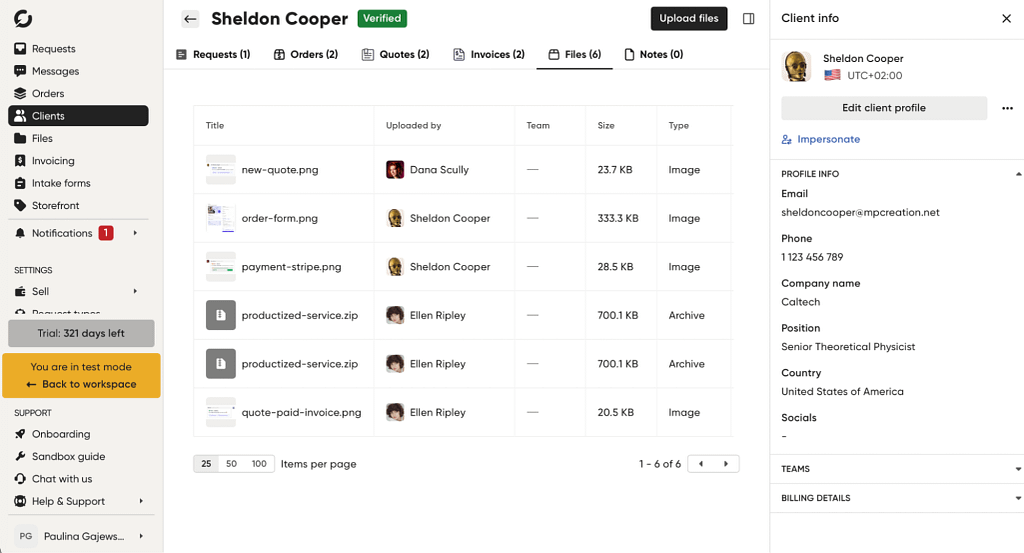
Setting up an easily accessible, single space for all the data can be a true life-saver. Whether it’s contracts, invoices, client assets, project files, meeting notes, or login credentials, having everything stored in one place makes it much easier to work efficiently.
Mind you, this will require some work to maintain. To make it easier, you can invest in tools that automatically store and organize data, offer strong search functionality, and support user roles and permissions. Not everyone on your team needs access to financial records, contracts, or other sensitive information, after all.
Good examples of such tools are Notion, AirTable, ClickUp, Jira, or Zendo.
🎯 What to do:
- Keep your work organized from day one in an easily accessible space, ideally taking advantage of automation features.
9. Deliver Regular Updates
Here, we can’t advise too much on how to do your craft. But! There are several rules that can easily elevate the customer experience, even though from a business’ perspective it may not seem like much. They include:
- Regular updates — let clients know what’s happening with the project as you go; even a brief update can reassure them that everything is on track and assuage any worries.
- Updated timelines — set and keep all the deadlines, both for milestones and end results. If anything changes, let your clients know immediately.
- Quick responses — answer any questions as soon as possible, even if it’s just to say “I’ll inform you in two hours”.
- Transparency — even though it’s painful, it’s better to fess up if there are any mistakes, issues, or delays. Your clients will appreciate your honesty!
- Personalization — make sure all the messages and files are tailored to each person, especially when dealing with automation. Just don’t mix up any names!
- Follow-ups — even if you have parted ways, checking in after everything has been said and done will ensure you stay in your client’s good graces.
These small actions require relatively little effort but can have a huge impact on customer trust, satisfaction, and loyalty. Take advantage!
🎯 What to do:
- Never leave your clients in the dark! Update them regularly, showing off progress and informing them of the next steps.
10. Collect Feedback
Collecting customer feedback — the bad, the good, and the ugly — will help you grow your business in several ways.
First of all, if there were any negatives mentioned, you know what needs improvement. Otherwise, you’ll keep repeating the same mistakes across your entire customer base with you none the wiser.
Secondly, any good words can be used (with client’s consent, of course) as part of your marketing. You can paste quotes on your website, show it off on your social media, or even on ads. According to The Medill Spiegel Research Center (SRC), adding just a few customer testimonials to your website can make sales jump up to 270%.
Now, when and how should you ask for feedback?
With subscription services, there are several points in the collaboration where you can safely ask for feedback via a survey or a questionnaire:
- After onboarding: if the process is more complex — introducing the Client Portal or other collaborative spaces — then you can use the opportunity to ask about it.
- After bigger milestones: if there are any as part of your subscription service, make sure to gauge the satisfaction level and request a review if the client is truly happy with the deliverables.
- Every 3-6 months: don’t be afraid to send out business relationship check-ins once in a while, asking general questions.
- At cancellation: don’t forget to ask for the reason why someone leaves you; was the price too high, or did they simply get what they wanted in the first place?
🎯 What to do:
- Gather feedback to know what works and what doesn’t. Show off the good reviews when you can — and with client’s consent, of course!
11. Nurture Clients & Leads
Next on the list is looking after your existing client base while continuing to attract new leads.
When it comes to the latter, managing client flow is easier with subscriptions. In theory, you know exactly when clients may leave, making it easier to predict when you should start filling your pipeline with new business. Promoting yourself both online and offline, as well as encouraging referrals, should be an ongoing effort. Even if your schedule is full, don’t neglect marketing your services and building your reputation.
Letting people know you’re fully booked can also work in your favor. It signals to potential clients that your services are in demand, reinforcing your credibility.
But when you’re focused on growing your client base, it’s easy to overlook the clients you already have. And turns out, retaining existing clients is often easier and more cost-effective than acquiring new ones; according to Rivo, retaining customers costs 5 times less than finding new ones, while a 5% increase in customer retention can boost profits anywhere from 25% to 95%.
Beyond delivering a consistently great experience, try encouraging clients to subscribe to longer-term plans. Exclusive offers, loyalty discounts, or added perks can make switching from a monthly or annual subscription an easy decision to make.
🎯 What to do:
- No matter your workload, stay on the lookout for new opportunities.
- Make the effort to treat your existing clients exceptionally well to reduce churn and encourage them to switch to long-term subscription plans.
12. Let Technology Help You
Now, this list is getting longer and longer. Turns out, there are many things to keep in mind! Selling subscriptions online might feel particularly overwhelming, but the good news is: technology may ease the strain tremendously.
Currently, there are many different tools available on the market, from robust business management software (like HubSpot), intuitive and easy-to-use Client Portals (Zendo being the prime example), to a platform tailored specifically to photographers (Studio Ninja).
What benefits can you expect from using any of these tools?
- Delegated administrative work: issuing invoices, sending quotes, calculating taxes, summing up financials — all of these can be automated, at least partially, to allow you to focus on your actual, creative work.
- More predictable workflows: standardized processes, templates, and automations ensure every project follows the same high-quality workflow, making your business easier to manage.
- Single source of truth: all your files are stored in one place, ensuring easy access and eliminating wasted time on hunting down relevant data across different tools.
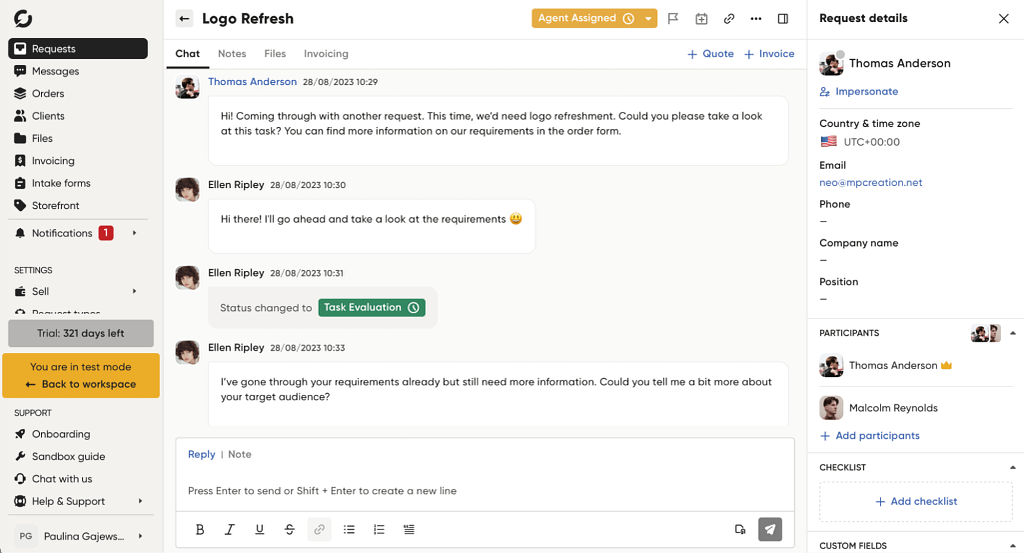
- Facilitated collaboration: most tools aggregate all communication in one place, making it easy to follow emails and private messages. Some, like Zendo, come with their own internal communication channel for maximum convenience.
- Business insights: most software will collect data and share it with you to gauge your business’ health levels, helping you uncover bottlenecks, projects that are bottomless pits, and team members that are underutilized.
And that’s just the tip of the iceberg; for more, read this article.
🎯 What to do:
- If you can, invest in the right tools that can help you run your business smoothly, saving time on administrative work and elevating client experience even further.
13. Reiterate
Last but not least: reiterate!
At this point, you’re capable of creating a workflow for selling subscriptions online, from setting up pricing, shaping offers to suit your audience, all the way to collecting feedback and upgrading your clients to long-term plans. But even if you go through all these steps, it doesn’t mean your work is over.
There might be things that we’ve neglected to mention, and which make a huge impact in your specific business use case. Some of the advice might turn out outdated in a year or two, or maybe you’ll simply outgrow your workflow as your business thrives. In all these cases, making changes to your processes ensures you stay right on track, removing steps that don’t suit you and bringing attention to those that aren’t developed enough.
In other words, stay vigilant. There’s always something that could be improved or removed entirely if it no longer serves its original purpose.
This is especially important if you’re running an agency. With more people onboard, you need to double check if the processes don’t slow down work without a good reason.
Conclusions
Selling subscriptions online is still a good idea, as long as you can explain the value of your service properly. With varied pricing, convenient payment, and the luxury of having access to a skilled professional whenever they need one, subscriptions give clients predictability while providing your business with a more stable and recurring source of income. When paired with the right tools and a strong focus on customer relationships, they can become the foundation for sustainable, long-term growth.
Here’s a brief recap of all the steps necessary to make your subscription-based business succeed:
- Say Hello to Competition: do your research to gauge what you’re up against. If you have to go against household names, look for a niche to get comfortable in.
- Understand the Audience: step into your clients’ shoes to ensure you offer an actual solution to their problems, and that the value you offer justifies the price.
- Shape Your Offer: include different tiers to catch the attention of clients with various needs and budgets.
- Shape Terms & Conditions: make sure everyone is on the same page when it comes to cancellations, subscription pause, request limits, and more.
- Shape Your Pricing: include discounts for long-term subscription options as well as use the opportunity to upsell and cross-sell your services.
- Set Up Payments & Checkout: use the right tools to make payments as easy and convenient as possible; ideally, by automating them.
- Include Onboarding: welcome your clients with sufficient care, explaining the collaborative process, linking to important resources, and sharing the schedule.
- Prepare Single Source of Truth: store all the data in one place to make them easily accessible at any time, both for you and your clients. Your future self will thank you.
- Deliver Regular Updates: keep your clients informed at all times as to where you stand with the project; even if progress has stalled, send them a quick message.
- Collect Feedback: gauge the satisfaction level of your clients. Use the bad reviews to improve your processes and boast of the good ones online.
- Nurture Clients & Leads: stay on the lookout for new opportunities as well as encourage current clients to switch to pricier or longer subscription tiers.
- Let Technology Help You: invest in tools that can propel your business through automation. Don’t waste time on issuing invoices manually ever again!
- Reiterate: keep finding opportunities to improve your internal processes; ensure there are no bottlenecks hindering your work.
On the topic of healthy software, check out Zendo’s forever free plan — no credit card needed and no time limit to boot, giving you ample time to see if the software is what you’re looking for.
Frequently Asked Questions: How to Sell Subscriptions Online
What is the best way to sell subscriptions online?
The best way to sell subscriptions online is to offer clear value that encourages customers to stay for the long term. Define what is included in each subscription tier, make pricing transparent, and use a reliable subscription management platform to automate payments, renewals, and customer communication. A smooth sign-up process and excellent customer support are also key to retaining subscribers. To establish your brand as trustworthy, make sure the sign-up experience features a clean, intuitive user interface.
Which businesses can benefit from a subscription model?
Subscription models work well for a wide range of businesses, including fitness trainers, consultants, designers, agencies, software companies, educators, beauty professionals, and maintenance services. The model works best when there is a clear, recurring need — whether you’re delivering a service, offering exclusive access to digital content, or bundling complementary products into a curated package.
How do I price my subscription service?
Start by calculating your costs, estimating the value you provide, and researching competitors. Encourage longer commitments by offering discounts on annual subscriptions compared to monthly plans. Consider allowing subscribers to customise their plan; even basic customisation options can reduce churn by making the offer feel more personal.
How can I reduce subscription cancellations?
Reducing churn starts with consistently delivering value. Communicate regularly with your subscribers; often enough, a newsletter works best. Offer exclusive perks or exclusive access to premium resources to reward loyalty. Track any fitting metric, such as engagement rate and churn rate, alongside your conversion rate to identify where subscribers are dropping off.
What tools do I need to sell subscriptions online?
At a minimum, you’ll need a website or online store, a secure payment gateway that supports recurring billing, and subscription management software. As your business grows, customer relationship management (CRM), invoicing, analytics, and marketing automation tools can help streamline operations and improve the subscriber experience.